The Ultimate Guide to Turnbuckles: Selection, Installation, and Applications

about

Ultimate Turnbuckle Guide: How to Choose and Install Like a Pro

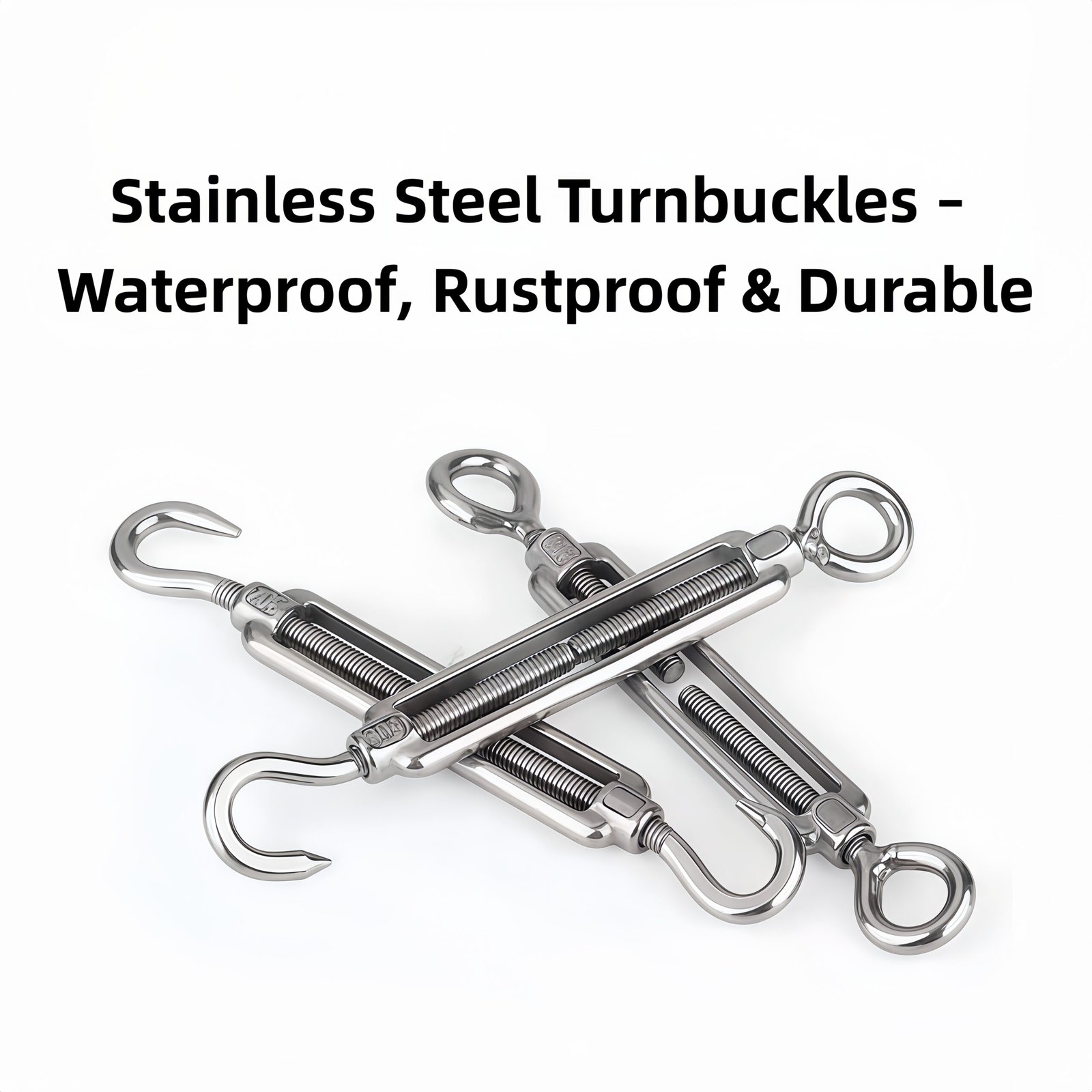
 is an indispensable core rigging hardware in tensioning systems. As an efficient wire rope tensioner, its pivotal role lies in delivering precise adjustable tension. By rotating its body, it utilizes the reverse-threaded structures at both ends to linearly and accurately tighten or slacken cables, chains, or rods, enabling effortless tension fine-tuning and compensation for slack after system installation. This unique, reliable, and direct adjustability makes it a critical component for ensuring preset tension and structural stability in various tensioning systems, such as rigging, bridges, and stage trusses.

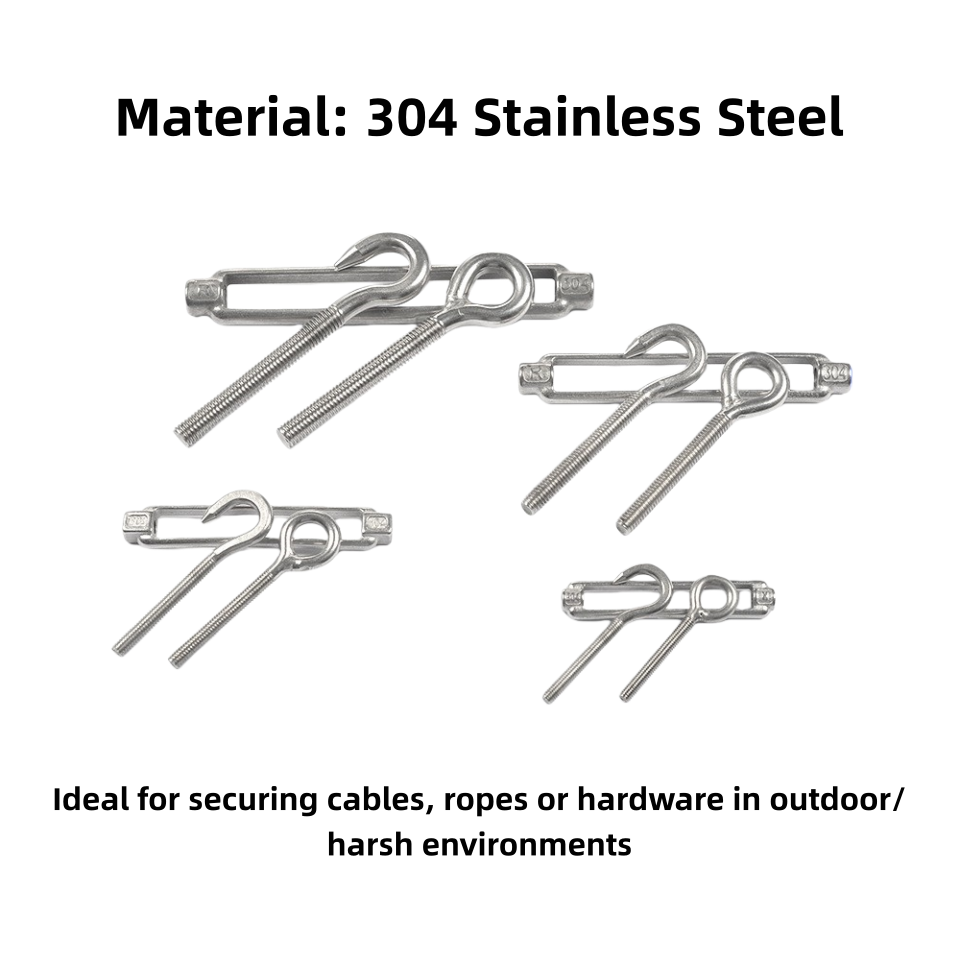
In a rigging system, Hook, Eye, and Jaw are the three most common connector forms at the end of a Turnbuckle, and their combination directly determines their usage, safety, and applicable scenarios.

For your convenience in quickly understanding, here are their common combinations and characteristics:

Combination TypeStructural CharacteristicsMain AdvantagesMain Disadvantages / PrecautionsTypical Application Scenarios
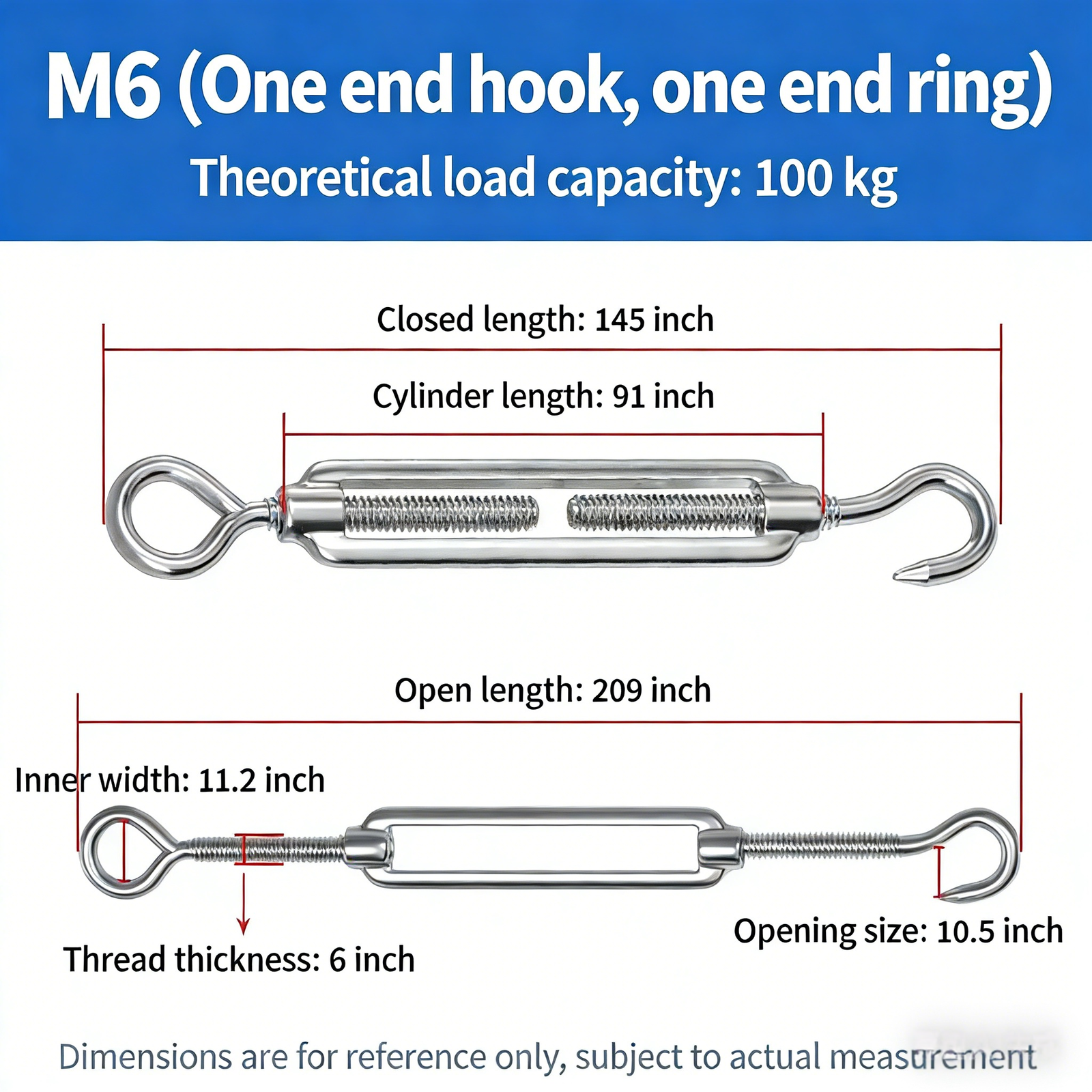
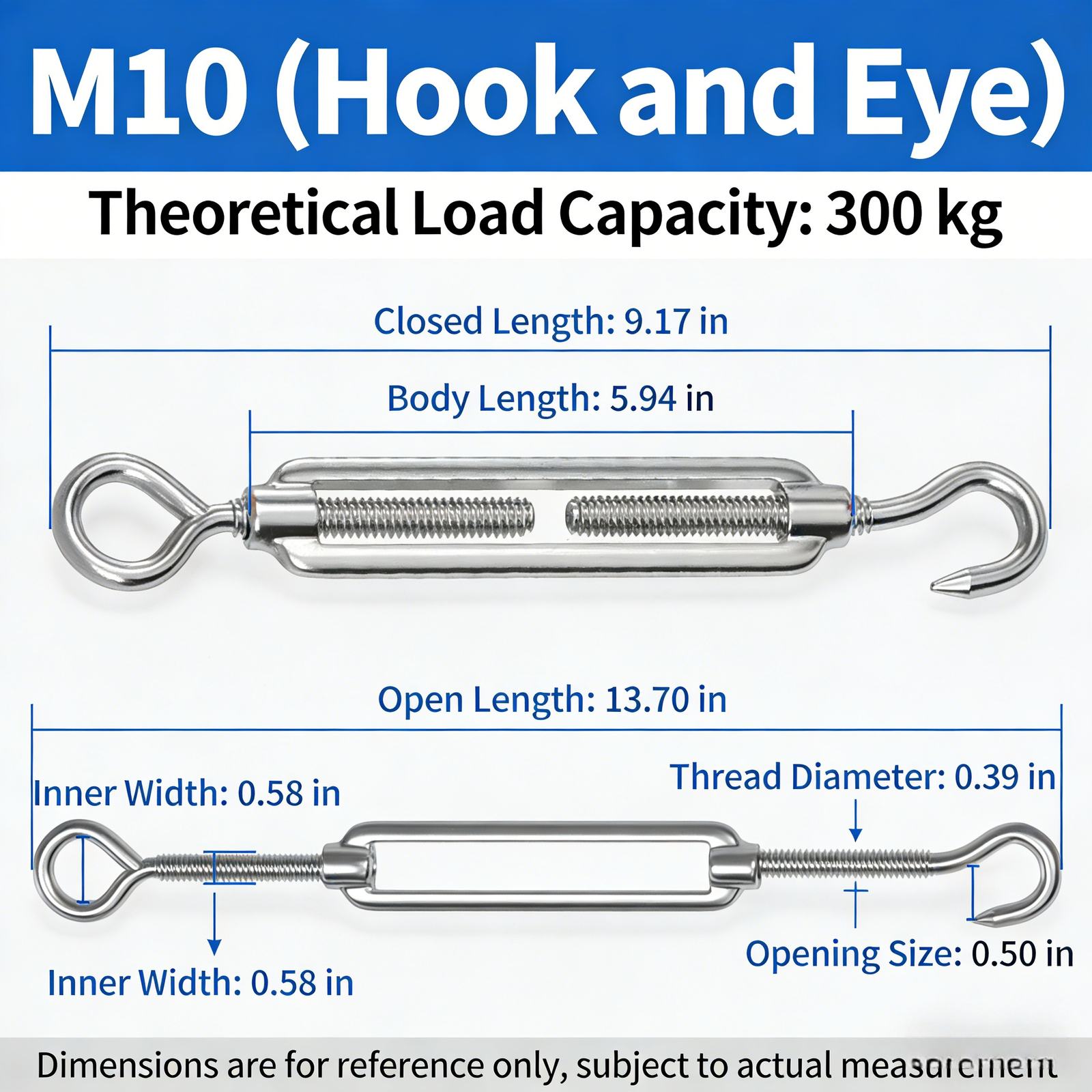
Hook & EyeOne end is a hook, the other is a closed loop.Flexible installation: The hook end can be quickly attached to shackles or chains.Lower safety: The hook may slip off under no load or side load.Temporary tensioning, non-critical static structures, stage rigging (with safety measures).
Lower cost, widely used.Usually requires a safety latch or mousing wire to prevent disengagement.
Jaw & JawBoth ends are jaw ends with pin holes.Most secure connection: Connected via a pin/bolt, can withstand multi-directional forces.Slightly more complex installation: Requires matching bolts, pins, or shackles.Permanent or high-safety structures, e.g., structural steel tensioning, heavy machinery, marine rigging.
Prevents disengagement, highest safety.May have larger overall size and weight.
Allows for some angular movement of connected parts.
Jaw & EyeOne end is a jaw, the other is an eye.Balances safety and flexibility: The jaw provides a secure connection, the eye can connect to shackles or hooks.The eye connected with a shackle can become a potential weak point; ensure the shackle's rating matches.Scenarios requiring one fixed end and one flexible end; a common compromise solution.
Good versatility.
Hook & HookBoth ends are hooks.Most flexible and quickest installation.Highest safety risk: Both ends risk disengagement.Very few low-safety tensioning applications; requires extreme caution.
Strictly prohibited for lifting or in scenarios with vibration or swinging.

Lorem ipsum dolor sit amet, consectetur adipiscing elit. Ut elit tellus, luctus nec ullamcorper mattis, pulvinar dapibus leo.

pitting corrosion stainless steel

Material Selection: 304 vs. 316 vs. Galvanized

For rigging hardware such as turnbuckles or wire rope tensioners
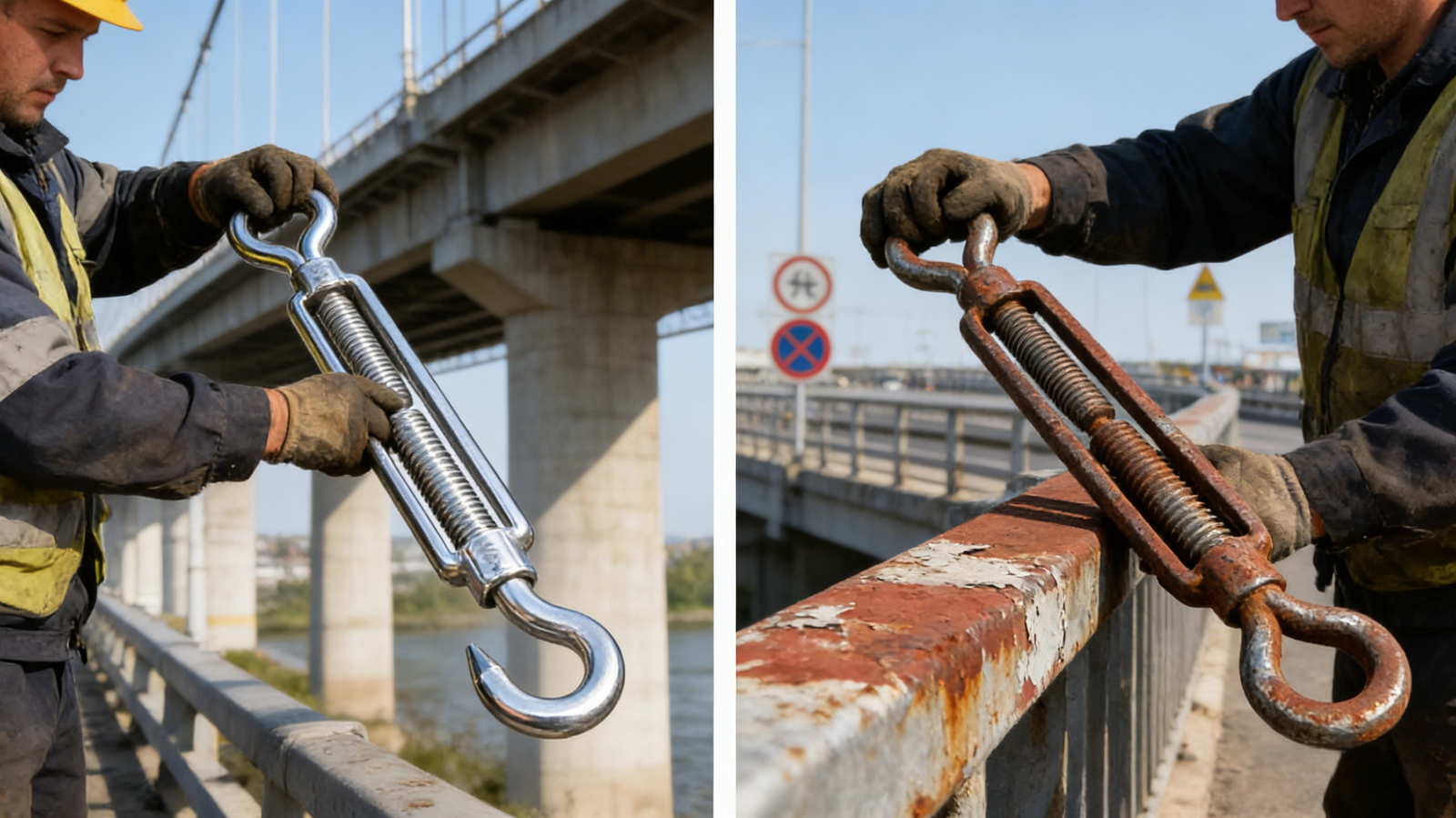
When choosing materials, the core consideration is the corrosion resistance in different environments, which directly affects the service life, safety, and maintenance cost of the equipment. The following is a core comparison of three common materials: 304 stainless steel, 316 stainless steel, and hot-dip galvanized carbon steel.

Technical Specifications & Safety Calculations

Selecting the right turnbuckle is not just about the size; it’s about the physics of tension. To ensure structural integrity, professionals use two primary calculations.

1. Determining the Working Load Limit (WLL)

The Working Load Limit is the safe operating capacity of the hardware. It is calculated by dividing the Minimum Breaking Load (MBL)—the point at which the metal actually fails—by a Safety Factor (SF).

For most industrial and architectural applications, a 5:1 safety factor is required:Turnbuckle Working Load Limit (WLL) calculation formula: WLL = MBL / SF
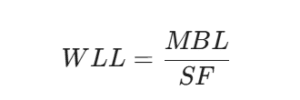
  • (Expert Note on Load Safety: To ensure project safety, we always recommend a 5:1 Safety Factor (SF) for industrial applications. The Working Load Limit (WLL) is the maximum force that should be applied to the turnbuckle during normal operation. If your manufacturer provides a Minimum Breaking Load (MBL) of 5,000 kg, your safe operating limit is 1,000 kg): Provided by the manufacturer (e.g., 5000 kg).

  • SF: Standard is 5.

  • Result: The WLL would be 1000 kg.

2. Thread Engagement Safety

To prevent the threads from “stripping” or pulling out under load, you must ensure sufficient Thread Engagement ($L_e$). A professional rule of thumb is that the engagement length should be at least 1.5 times the nominal diameter ($D$) of the bolt:Turnbuckle thread engagement safety formula: Le >= 1.5 x D

Installation Best Practice: A critical safety standard for turnbuckle installation is the Thread Engagement (Le). To prevent the risk of thread stripping or sudden failure under tension, the engagement length must be at least 1.5 times the nominal diameter (D) of the thread. For an M10 turnbuckle, this means ensuring at least 15mm of the bolt is securely threaded into the central body.)
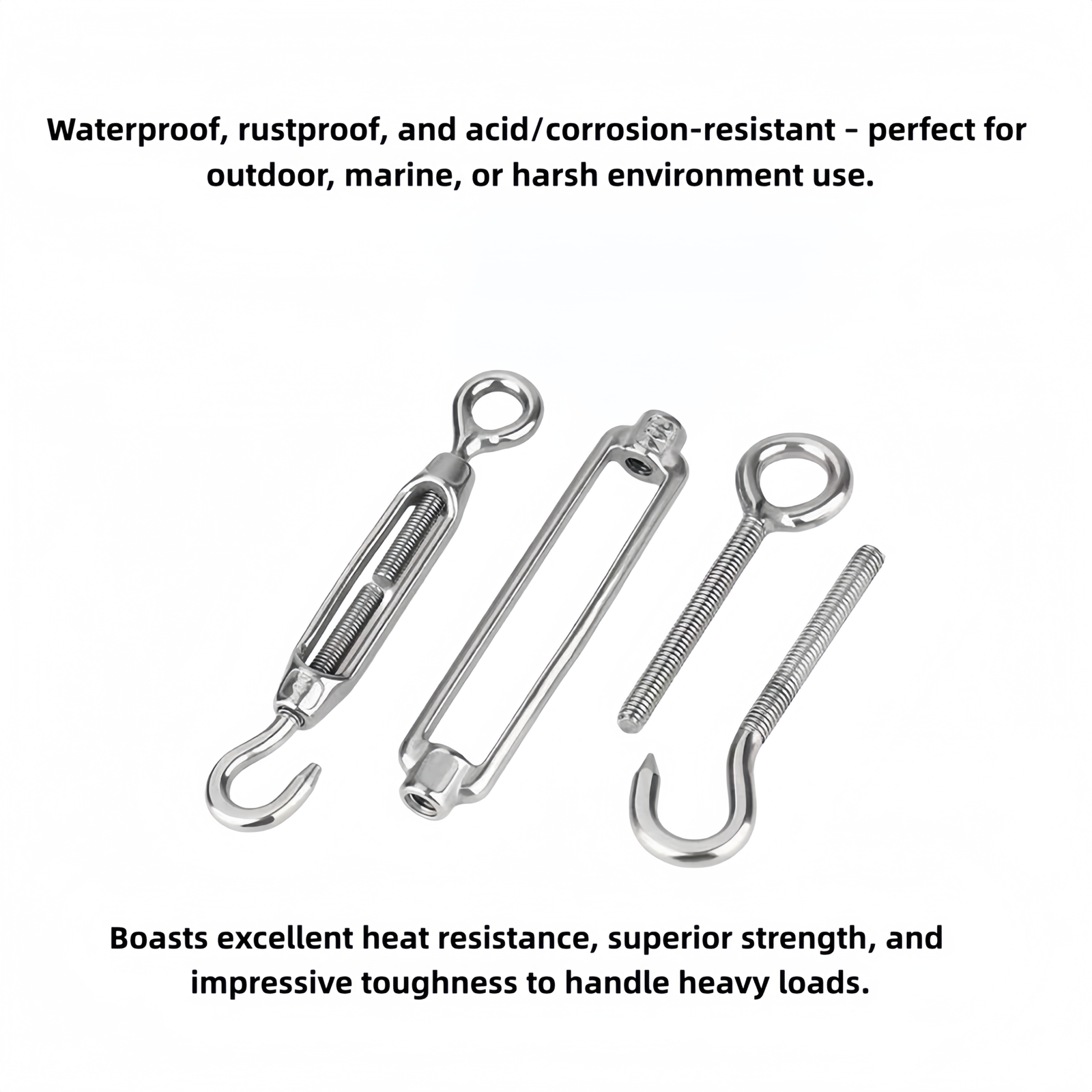
turnbuckle, you should have at least 15mm of thread screwed into the body at each end.
Confused about turnbuckle sizes? Our ultimate guide covers how to choose the right turnbuckle, 304 vs 316 stainless steel comparison, and step-by-step installation for any rigging project. Read more for expert tips and size charts.

1. Primary principle: Select materials accurately based on the usage environment

The corrosiveness of the environment directly determines the lifespan and reliability of materials. Inland/ordinary industrial environment: 304 stainless steel or hot-dip galvanized carbon steel are economically reliable choices. Both can effectively resist general humidity and atmospheric corrosion, meeting the daily use needs of most rigging accessories.

2.The corrosiveness of the environment directly determines the lifespan and reliability of materials.

Highly corrosive environments (coastal areas, ships, chemical plants, de icing salt roads): 316 stainless steel must be selected. The molybdenum (Mo) element contained in it can effectively resist pitting and crevice corrosion caused by chlorides, and is the only choice to ensure the long-term safe operation of key components such as wire rope tensioners in harsh environments.

3.Temporary, maintainable, or non critical structures:

Hot dip galvanized carbon steel has become the preferred choice due to its significant initial cost advantage. But it is necessary to clearly plan its inspection and maintenance cycle, as the zinc layer needs to be treated with rust prevention or replaced after consumption.When different metals come into direct contact with electrolytes (such as rainwater or humid air), they form primary batteries, leading to accelerated corrosion of the more active metals.

Day care

Schedule and tuition

Whole life cycle cost analysis: In harsh environments, although 316 stainless steel has the highest initial procurement cost, its almost maintenance free and extremely long service life characteristics often result in a much lower total life cycle cost than galvanized steel products that require regular maintenance or replacement. For long-term, critical applications, investing in more durable materials is usually a more economical choice. By following the framework of "environmental material determination, isolation of different materials, and balance of strength and cost", you can choose the most reliable and economical rigging accessory solution for specific tension adjustment needs. If further analysis is needed for specific application scenarios such as dock mooring and stage trusses, more details can be provided.

Installation and Maintenance Core Guide

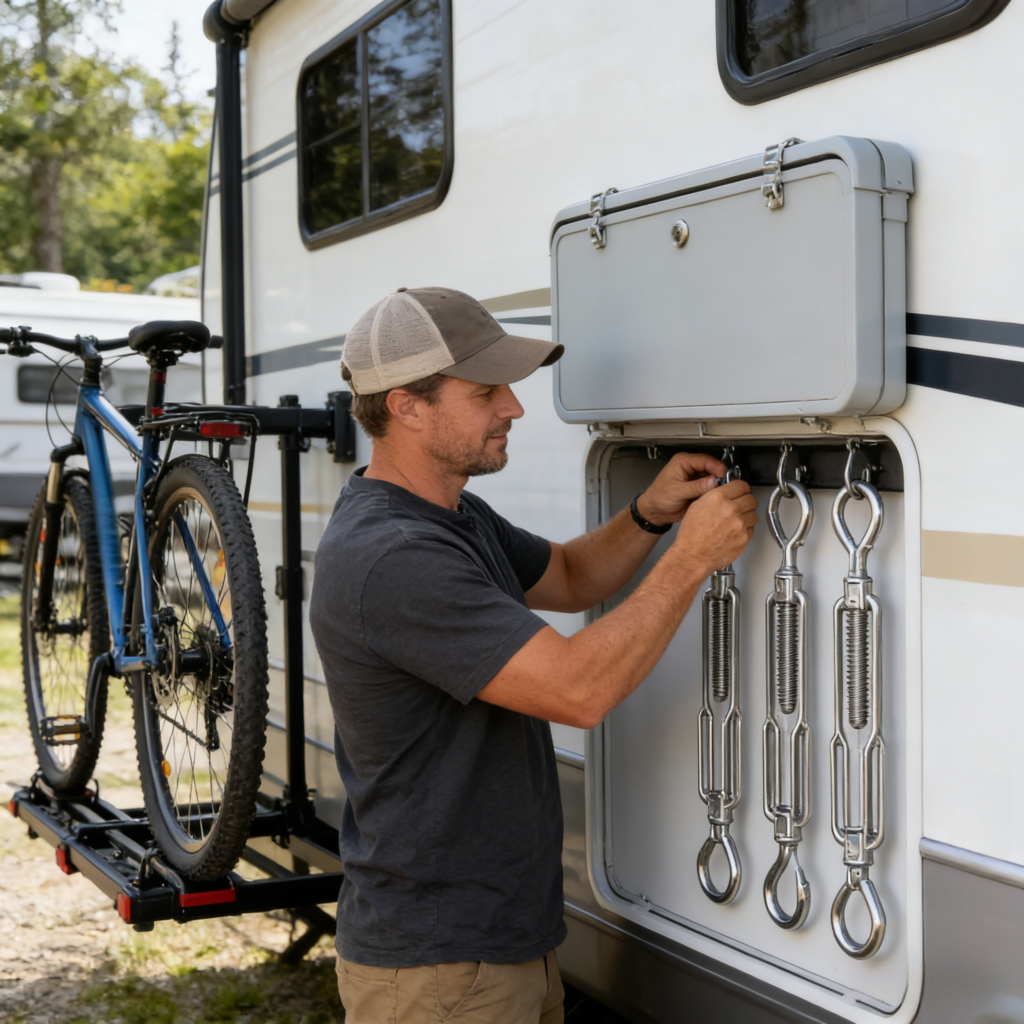
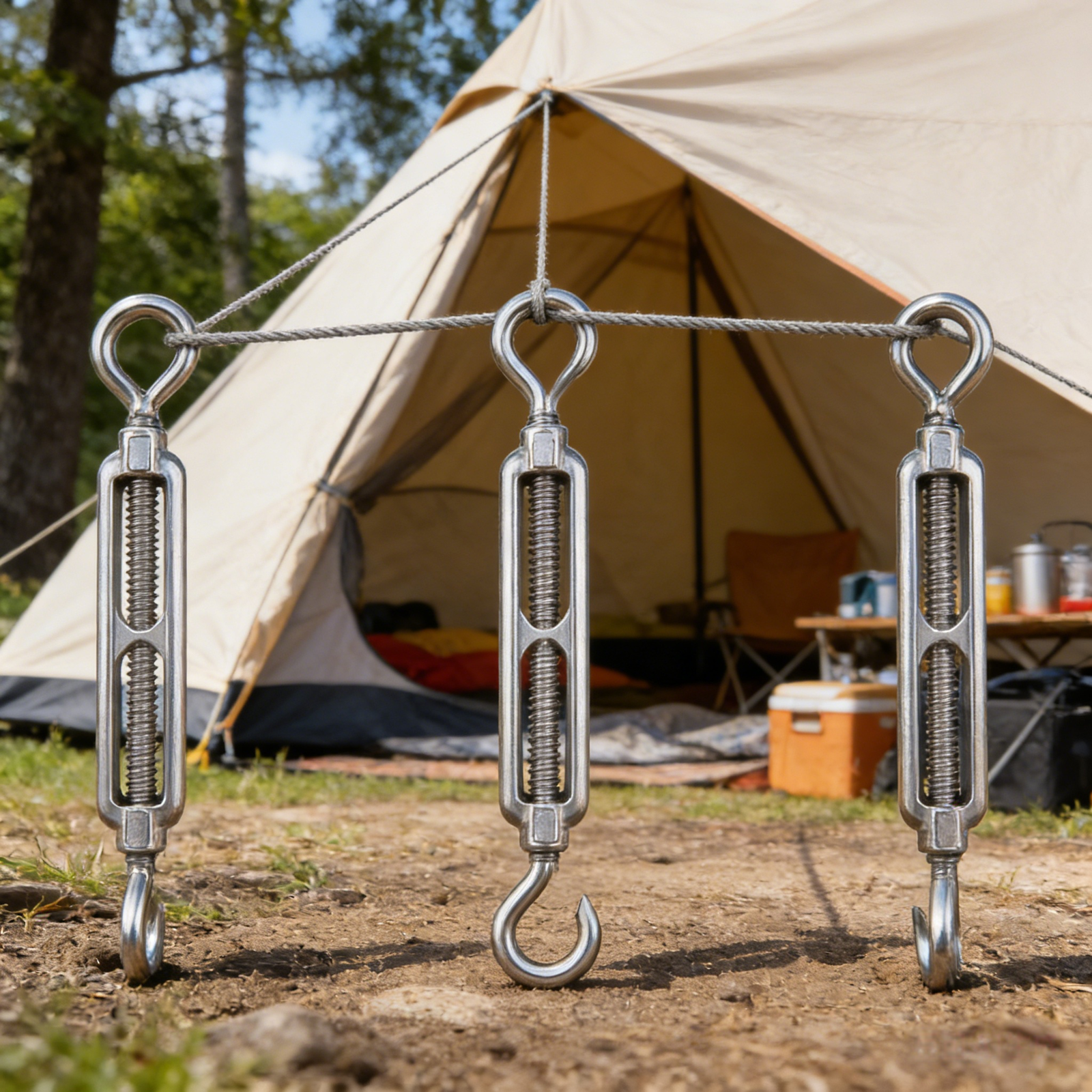
Step-by-Step: How to Install a Hook and Eye Turnbuckle on a Shade Sail

1. Extend: Rotate the turnbuckle body to extend the hooks to their maximum length.
2. Attach: Hook one end to the wall eye-bolt and the other to the shade sail’s D-ring.
3. Tension: Rotate the central body by hand or wrench to pull the sail tight.
4. Lock: Tighten the jam nuts to prevent loosening from wind and vibration.

Improper installation can immediately introduce safety hazards, please strictly follow the process. Component integrity: Check the wire rope tensioner body, threads, hooks/rings/forks for cracks, deformation, or rust. Ensure that all split pins and locking nuts are complete.

Component integrity

Check the wire rope tensioner body, threads, hooks/rings/forks for cracks, deformation, or rust. Ensure that all split pins and locking nuts are complete.

Avoid lateral force

During installation, ensure that the axis of the tensioner is in line with the direction of force to prevent additional bending moments caused by deflection angles, which may lead to premature damage to the threads or body.

Specification matching

Confirm that its working load limit (WLL) meets the system requirements and matches the specifications of the connected wire ropes, shackles, and other rigging accessories.

Uniform rotation

Adjust length and adjustable tension by rotating the body (rather than the end joints). The threads on both sides should be screwed in or out synchronously and smoothly, avoiding excessive exposure of the threads on one side.

Core security and precision assurance

Reserved thread:

After adjustment, the length of the threads on both ends that are screwed into the nut must be sufficient (usually not less than the diameter of the nut) to ensure full thread engagement, and multiple turns of threads must not be exposed to external forces.

Regular maintenance and safety inspections

Preventive maintenance can greatly extend the service life and detect potential faults in advance. Quick visual inspection: Check for obvious deformation, surface damage, or abnormal rust. Confirm that all anti loosening marking lines have not been displaced.

Once any of the following situations are discovered

,use must be immediately stopped and replaced: cracks, permanent bending, or tensile deformation in any part. The thread has severe wear, corrosion, or damage. The opening degree of the hook exceeds 15% of the original size, or any twisting deformation occurs. The cross-section of the body or component is significantly reduced due to corrosion.

Locking and anti loosening:

After adjusting to the required tension, the hexagonal parts on both sides must be locked relative to each other using a locking nut (if any) or wrench to prevent them from rotating and loosening due to vibration during use.

Cleaning and lubrication

Remove accumulated dirt and gravel. Apply an appropriate amount of specialized grease (such as molybdenum disulfide grease) to the threaded area to reduce wear and ensure smooth adjustment. Attention: If used in high-frequency vibration environments such as maritime, anti adhesive should be considered instead of ordinary lubricating grease.

Following the above installation and maintenance procedures

can ensure that your rigging accessory system always maintains the adjustable tension capacity and safety redundancy required by the design, effectively preventing accidental failures and ensuring operational safety.

Load bearing parameters of rigging basket bolts (M6-M20)

Rated safe working load: 0.25-0.35 t (ton) Minimum breaking load: 1.0-1.4 tons Applicable scenarios: Small fences, light sunshade cable fixation
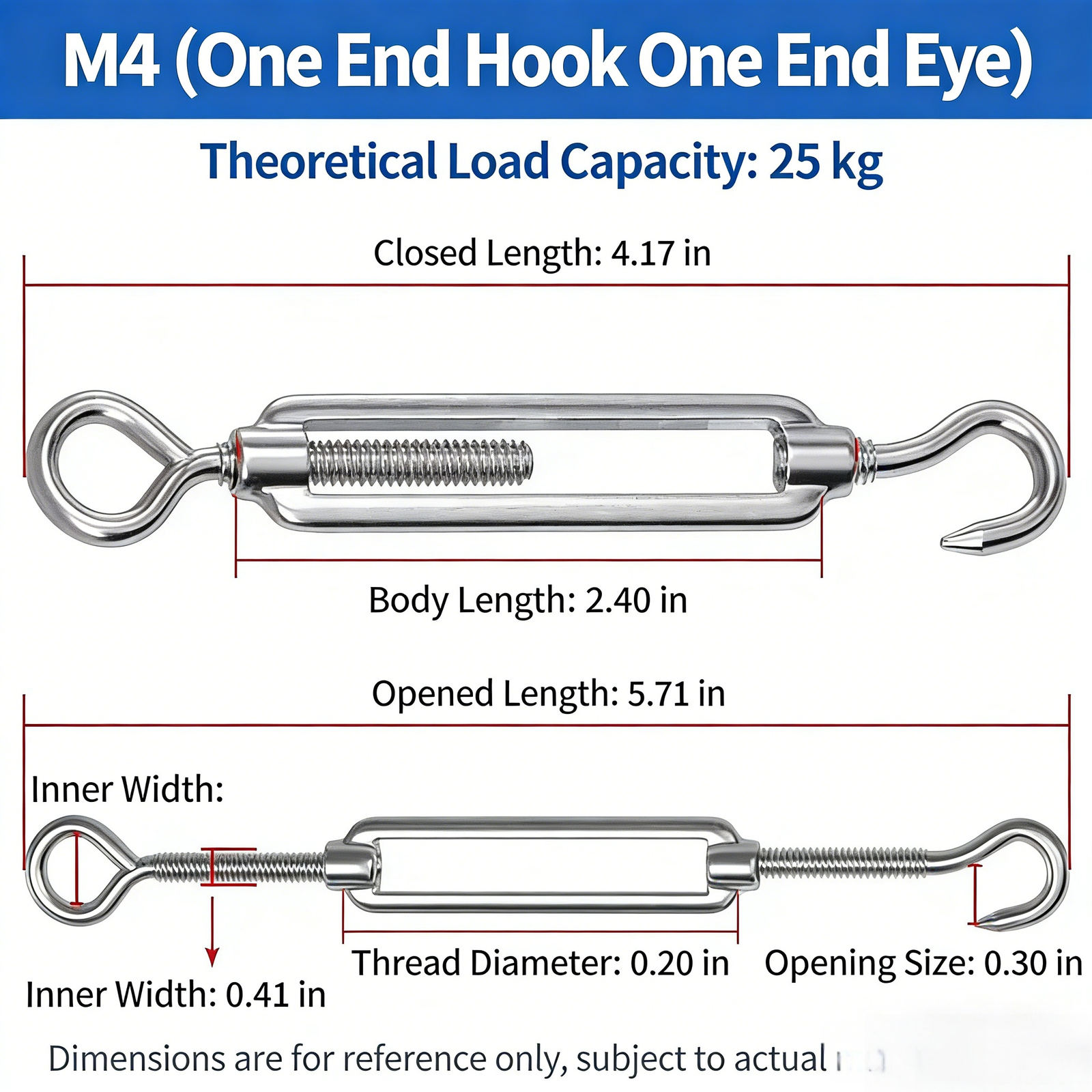
How to install hook and eye turnbuckle on shade sail。

304/316 stainless steel: 0.08-0.12 tons Hot dip galvanized carbon steel: 0.10-0.15 t (ton) (Carbon steel substrate has slightly higher strength than stainless steel, but its performance deteriorates rapidly in corrosive environments)
Rated safe working load: 0.9-1.2 tons Minimum breaking load: 3.6-4.8 tons Applicable scenarios: Building guardrails, fixing small billboards
M12 flower basket bolt Rated safe working load: 1.5-2.0 tons Minimum breaking load: 6.0-8.0 t Applicable scenarios: Steel structure support, medium-sized ship deck rigging M14 flower basket bolt Rated safe working load: 2.2-2.8 tons Minimum breaking load: 8.8-11.2 t Applicable scenarios: Bridge ancillary facilities, heavy-duty greenhouse skeleton M16 flower basket bolt Rated safe working load: 3.0-3.8 tons Minimum breaking load: 12.0-15.2 t Applicable scenarios: Port light loading and unloading equipment, industrial platform guardrails M18 flower basket bolt Rated safe working load: 4.0-4.8 tons Minimum breaking load: 16.0-19.2 t Applicable scenarios: Heavy building rigging, mining equipment auxiliary fixation M20 flower basket bolt Rated safe working load: 5.0-6.0 tons Minimum breaking load: 20.0-24.0 tons Applicable scenarios: Large vessel cable fixation, bridge tensioning structures Additional notes The impact of material differences: The load-bearing performance of 316 stainless steel and 304 stainless steel is basically the same; In a corrosive environment, if the zinc layer of hot-dip galvanized carbon steel is damaged and corroded, the load-bearing capacity will decrease by 10% -50% with the degree of corrosion."To complete your rigging setup, high-strength industrial 304 316 stainless steel chain is essential for safety and longevity."
Safety factor: The conventional design safety factor is 4 (breaking load ÷ safe working load), and products with a safety factor of ≥ 5 should be selected for high-risk scenarios.

Summary: From "post fault maintenance" to "preventive management"

The key to achieving long-term safety and reliability lies in transforming the management mindset of rigging accessories from passive "replace when broken" to proactive full lifecycle health management. Through the above systematic guarantee and optimization measures, you can not only significantly reduce the risk of unexpected failures, but also ensure that these key components that provide adjustable tension are as precise and reliable as designed throughout their entire service life.

FAQ: Professional Guide to Turnbuckles

Q1: What are turnbuckles used for?

A: Turnbuckles are specialized rigging hardware designed to adjust the tension and remove slack from wire ropes, cables, and tie rods in various structural and industrial tensioning systems.

Q2: How is the load-bearing capacity of a turnbuckle determined?

A: The load-bearing capacity, or Working Load Limit (WLL), is determined by the turnbuckle’s diameter and material grade (e.g., SS316). It is calculated based on an industry-standard safety factor of 5:1, meaning the ultimate breaking strength is five times its rated WLL to ensure maximum safety and structural integrity under dynamic stress.

Q3: Can turnbuckles be used for lifting?

A: Warning: Most standard turnbuckles are designed strictly for tensioning and tie-down applications only and should never be used for overhead lifting. Only specialized, forged turnbuckles that are explicitly load-rated and certified for overhead lifting by the manufacturer should be used for such purposes.

“Need a Bulk Quote for Your Project? Get a Factory-Direct Price in 24 Hours.

+86 15952693580

liyan@youjiasupplier.cn

Address:

Leave a Comment

Your email address will not be published. Required fields are marked *